
Caring from 1,000 Miles Away: How Long-Distance Families Stay Connected to Their Parent's Home Care in South Florida
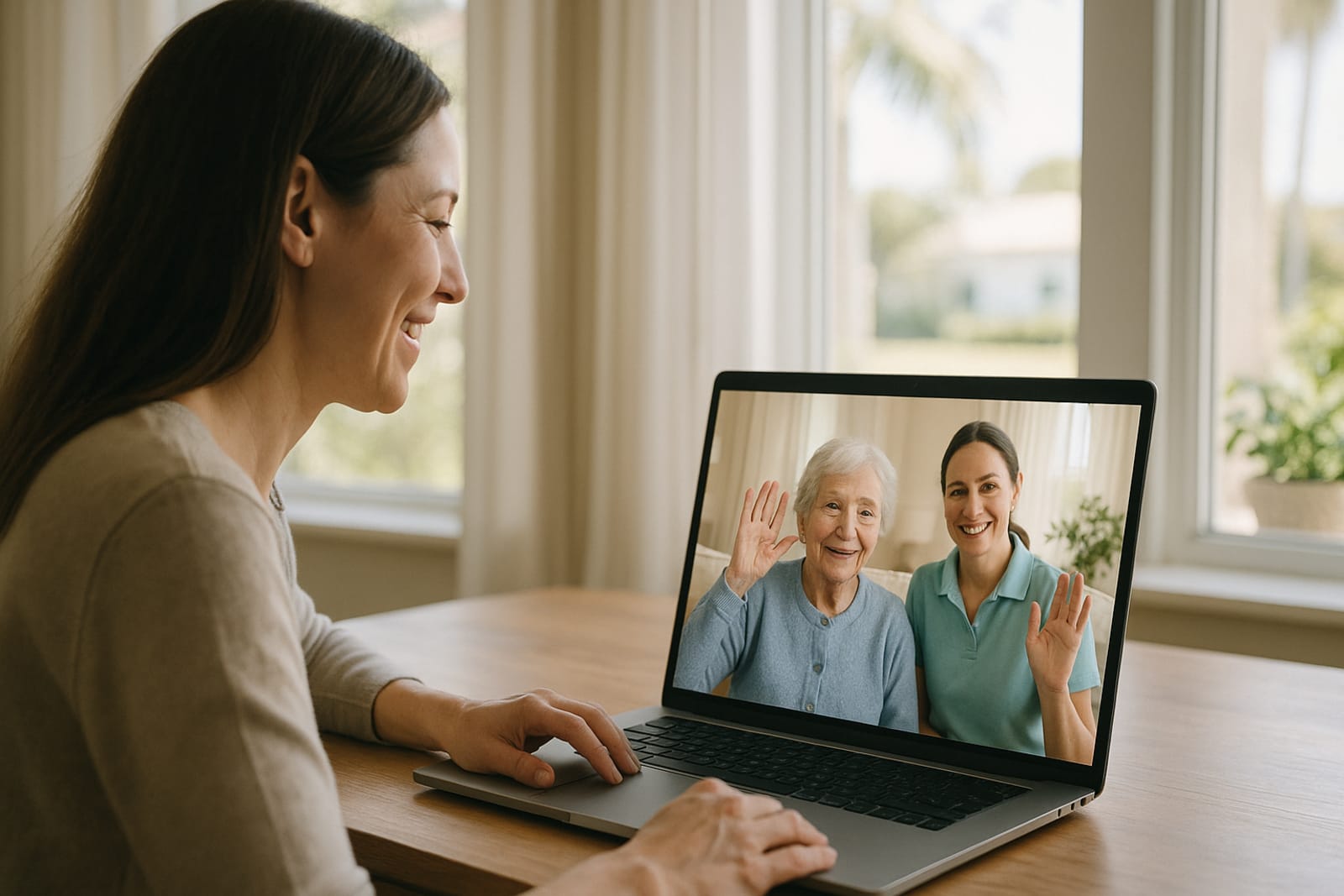
Caring from 1,000 Miles Away: How Long-Distance Families Stay Connected to Their Parent's Home Care in South Florida
You are sitting at your kitchen table in Philadelphia, or maybe Tel Aviv, or maybe Chicago. Your phone buzzes. It is a neighbor calling about your mom in Boca Raton. She fell again, this time getting out of the shower. The neighbor heard the commotion through the wall. Your stomach drops, not just because of the fall, but because someone who lives thirty feet from your mother knew about a crisis before you did, and you are her daughter.
This scenario plays out hundreds of times a week across South Florida. Parents retire to the sunshine, and their adult children remain scattered across states, countries, and time zones. When health starts to decline, families face an impossible-feeling challenge: how do you manage care, make informed decisions, and stay meaningfully connected to your parent's daily wellbeing when you cannot simply drive over and check on them?
The truth is, distance does not have to mean disconnection. But bridging the gap takes more than good intentions. It takes a deliberate communication structure, the right technology tools, and a care team that treats long-distance family members as essential partners rather than occasional callers.
Here is what you need to know about making long-distance caregiving work, specifically for families navigating the unique dynamics of South Florida's aging population.
The Long-Distance Caregiving Reality in South Florida
South Florida is unlike most regions in the country when it comes to caregiving dynamics. Retirees flock here from the Northeast, the Midwest, and increasingly from international communities. That means their children, grandchildren, and extended support networks are often scattered across multiple states or even multiple countries. The result is a caregiving landscape where the people making decisions are rarely the people who see the patient every day.
Whether you are a state away, it is the same as being an ocean away. I don't think there is a big difference of being in Israel and taking care of your mom here in Florida or being in Pennsylvania and trying to manage your mom's care. The emotional weight, the logistical challenges, and the information gaps are remarkably similar regardless of whether you are two hours away by plane or twelve.
What makes South Florida particularly complex is the seasonal nature of many families' involvement. Some adult children visit only during the holidays. They see their parent at Thanksgiving, everything seems fine, and then they do not return until the following year. In that gap, significant changes can happen: weight loss, cognitive decline, mobility issues, medication mismanagement. By the time the family returns, they are reacting to a crisis instead of preventing one.
The Information Gap Is the Real Problem
The core challenge of long-distance caregiving is not distance itself. It is the information gap. When you live nearby, you notice the small things: the refrigerator is empty, the mail is piling up, your parent is wearing the same clothes they wore three days ago. These subtle signals tell you something is changing before a fall or hospitalization forces the issue.
When you are remote, those signals are invisible to you. And that creates a dangerous lag between when a problem starts and when you become aware of it. The families who navigate long-distance caregiving most successfully are the ones who build systems that close that information gap proactively, not the ones who rely on phone calls that start with "How are you, Mom?" and end with "Fine, dear."
The Surprising People Who Shape Your Parent's Care
One of the most overlooked aspects of long-distance caregiving is understanding who actually has the most relevant information about your loved one. It is not always who you would expect.
Grandchildren Often Have More Influence Than You Think
A lot of times the grandkids have more input than the actual blood children. It is interesting how proximity changes what people want to say about something. This is something we see consistently, and it catches many families off guard.
Grandchildren, particularly those who live closer to the aging grandparent or who maintain more frequent contact through technology, often have a clearer picture of day-to-day realities than the adult children who are nominally "in charge" of care decisions. A grandchild who FaceTimes with grandma three times a week may notice cognitive changes, mood shifts, or physical decline well before a son or daughter who visits quarterly.
There is also a relational dynamic at play. Grandchildren may feel less conflicted about reporting concerns. Adult children often struggle with role reversal, the emotional difficulty of directing care for a parent who used to take care of them. Grandchildren do not carry that same weight, which means they are sometimes more forthcoming about what they are observing.
If you are coordinating care from a distance, consider formally including grandchildren in your communication loop. Their observations may be the earliest and most accurate intelligence you receive about changes in your parent's condition.
Neighbors and Friends May Know More Than Family
Here is an uncomfortable truth: your parent's neighbor might have a better understanding of their daily functioning than you do. The neighbor who sees your mom walk to the mailbox every day notices when she stops going. The friend who plays cards with your dad every Tuesday afternoon notices when he cannot follow the game anymore.
Sons or daughters sometimes only see their family when they come down for Thanksgiving or Christmas. Meanwhile, there are other people, even neighbors or friends, who might have more to say about what is really going on. Depending on how involved the power of attorney or primary caregiver is willing to let others be, these community voices can be invaluable.
A good home care team will not limit their communication to just the person who signed the contract. They will ask who else is in your parent's life, who sees them regularly, and who might have observations worth hearing. This broader circle of input leads to better care decisions and earlier intervention when something changes.
Building a Communication Structure Before Care Starts
The single most impactful thing a long-distance family can do is establish a communication structure before care begins, not after the first problem arises. Too many families start care and then scramble to figure out how to stay informed. By then, they are already in reactive mode.
The Pre-Care Communication Framework
Here is a practical framework for setting up communication with your home care team before the first caregiver ever walks through the door:
Step 1: Identify Your Communication Circle
Before care starts, sit down and map out every person who should be part of the information loop. This includes:
- Primary decision-maker (usually the person with power of attorney)
- Secondary family contacts (siblings, spouse, other adult children)
- Grandchildren who maintain regular contact
- Local contacts (neighbors, friends, community members who see your parent regularly)
- Medical contacts (primary care physician, specialists, pharmacy)
Step 2: Define Communication Channels and Frequency
Not everyone needs the same information at the same time. Establish a tiered communication plan:
- Daily updates: Caregiver shift notes available through the care agency's family portal or software
- Weekly check-ins: A scheduled call between the care coordination team and the primary family contact
- Bi-weekly or monthly group updates: A broader call or group chat update that includes the extended communication circle
- Urgent notifications: A clear protocol for who gets called first, second, and third in an emergency
Step 3: Establish What Gets Communicated
This is where most families fall short. They say "keep us updated" without defining what that means. Work with your care team to specify:
- Changes in appetite, weight, or nutrition
- Changes in mobility or activity level
- Medication changes or compliance issues
- Mood or behavioral changes, especially relevant for dementia patients
- Updates on ongoing medical treatments (therapy progress, wound healing, lab results)
- Any interactions with other medical providers
Step 4: Set Up Technology Tools
Ask your home care agency what technology platforms they offer for family communication. Many agencies, including ours, provide family portal access through their care management software. We can offer family rooms into our software to communicate with staff and caregivers on a day-to-day basis. The way that we are growing in our proprietary AI investment will provide a whole different piece to this puzzle.
Beyond agency-provided tools, consider setting up:
- A dedicated family group chat (WhatsApp, iMessage, etc.) specifically for care-related updates
- Shared document access (Google Drive, Dropbox) for medical records, insurance information, and care plans
- A shared calendar for medical appointments, therapy schedules, and care team check-ins
Technology Tools That Actually Bridge the Gap
Technology has transformed long-distance caregiving, and the pandemic accelerated that transformation dramatically. Agencies that adapted during COVID-19 learned how to conduct FaceTime assessments, Zoom family meetings, and virtual caregiver introductions. Those capabilities did not go away when the pandemic ended. They became standard operating procedure.
Family Portals and Care Software
The most effective tool for long-distance families is access to the care agency's own software platform. A good family portal allows you to:
- See real-time caregiver check-in and check-out times so you know exactly when care is being provided
- Read daily shift notes from caregivers documenting what happened during each visit
- Communicate directly with the care coordination team without playing phone tag
- Access care plans and updates as they evolve over time
- Review scheduling changes before they happen
This kind of transparency is transformative for long-distance families. Instead of calling and hoping someone is available to give you an update, you can log in and see exactly what is happening with your parent's care in real time.
Virtual Caregiver Introductions
One practice that has become essential for long-distance families is conducting caregiver interviews via FaceTime or video call before the caregiver ever meets the patient. This allows family members, regardless of where they live, to participate in choosing the person who will be in their parent's home.
A lot of times the family is truly choosing the provider even before that provider meets the patient. This might seem like a small thing, but it is enormously important psychologically. When you have had a hand in selecting your parent's caregiver, you feel more confident in the care being provided, and that confidence reduces the anxiety that comes with being far away.
Scheduled Coordination Calls
Technology enables communication, but it does not replace structured human contact. The most successful long-distance caregiving arrangements include regularly scheduled coordination calls between the family and the care team. These are not just "checking in" calls. They are substantive, detailed conversations that track your parent's evolving needs.
A good coordination call covers specifics: When was the last time mom went to her doctor? Is she still getting her physical therapy? Has her weight changed? Has she had blood work done recently? Are there any nutritional deficiencies? How is the wound healing progressing? Did that wound worsen because the caregiver was not there enough hours to manage incontinence care, or because the incontinence products in the home are not the right ones?
These are developmental conversations about what the care team is seeing and what needs to be corrected. That level of detail is what separates genuine care coordination from surface-level status updates.
Why Proactive Communication Beats Reactive Crisis Management
The difference between families who feel in control of their parent's long-distance care and those who feel helpless almost always comes down to one thing: whether communication is proactive or reactive.
Reactive communication means you hear from the care team when something goes wrong. A fall. A hospitalization. A medication error. By the time you get the call, the crisis has already happened, and you are scrambling to respond from hundreds or thousands of miles away.
Proactive communication means the care team is reaching out on a scheduled basis to discuss how things are going, what has changed, and what might need to change. They are tracking multiple comorbidities, not just one. They are noticing that your mom's weight has shifted from 140 to 170 pounds and asking about her nutrition. They are seeing that a wound has progressed from a stage one to a stage two and investigating why.
Many patients do not have just one condition. They have two, five, ten comorbidities that all need to be addressed. Proactive communication is how those overlapping conditions get managed before they compound into a crisis.
Scheduled calls should happen at predictable intervals: at the start of care, at 7 days, 30 days, 60 days, and then on a regular biannual or quarterly basis depending on the complexity of care. On top of those scheduled calls, there should always be the ability to reach someone for urgent matters. But the scheduled structure ensures that nothing falls through the cracks during the quieter periods when no news might actually mean missed news.
What To Do Now
If you are managing a parent's care from a distance, or anticipating that you will need to soon, here is your action plan broken down by timeframe:
This Week
- Map your communication circle. Write down every person who has regular contact with your parent: family, neighbors, friends, medical providers. Note how often they see your parent and what kind of observations they might offer.
- Have the hard conversation with siblings. Decide who is the primary point of contact for the care team. Having one clear lead prevents confusion and conflicting instructions.
- Research home care agencies that offer family portal technology. Not all agencies provide digital transparency tools. Ask specifically about family access to care software, shift notes, and direct communication with coordination staff.
This Month
- Set up your communication structure with your care team. Use the pre-care framework outlined above. Define channels, frequency, escalation protocols, and the specific health indicators you want tracked.
- Conduct virtual interviews with potential caregivers. Do not skip this step just because you are not local. A FaceTime or Zoom introduction lets you assess personality fit, ask questions, and feel ownership over the care choice.
- Create a shared digital folder with all medical records, insurance information, care plans, medication lists, and emergency contacts. Make sure everyone in your communication circle can access it.
This Quarter
- Schedule your first formal care review call with the care coordination team. Use this to establish a baseline: your parent's current weight, mobility level, cognitive function, medication regimen, and ongoing treatments. Every future call will measure against this baseline.
- Evaluate whether your communication structure is working. Are you getting the information you need without having to chase it? Are the right people in the loop? Adjust channels and frequency as needed.
- Plan a visit specifically focused on care observation. When you do come to South Florida, spend time observing care in action, not just visiting socially. Watch how the caregiver interacts with your parent. Walk the home with fresh eyes looking for safety concerns.
The Bottom Line
Long-distance caregiving does not have to mean disconnected caregiving. The families who manage it best are the ones who build deliberate communication structures, leverage technology for daily transparency, and include the full circle of people who know and love their parent, from grandchildren to neighbors to the care team on the ground. If you are starting that journey, start by building the system, not by waiting for the crisis.
If you are managing a parent's care in South Florida from out of state, or anywhere in the world, we are here to help you build a communication plan that keeps you informed and involved. Contact #1 Home Care Services to schedule a consultation and learn how our family portal, coordination calls, and personalized care approach can give you confidence from any distance.
Need Help With Home Care?
Our care team is ready to answer your questions and help you find the right care solution for your family.