
A Holiday Connection Plan for an Older Parent Who Lives Alone
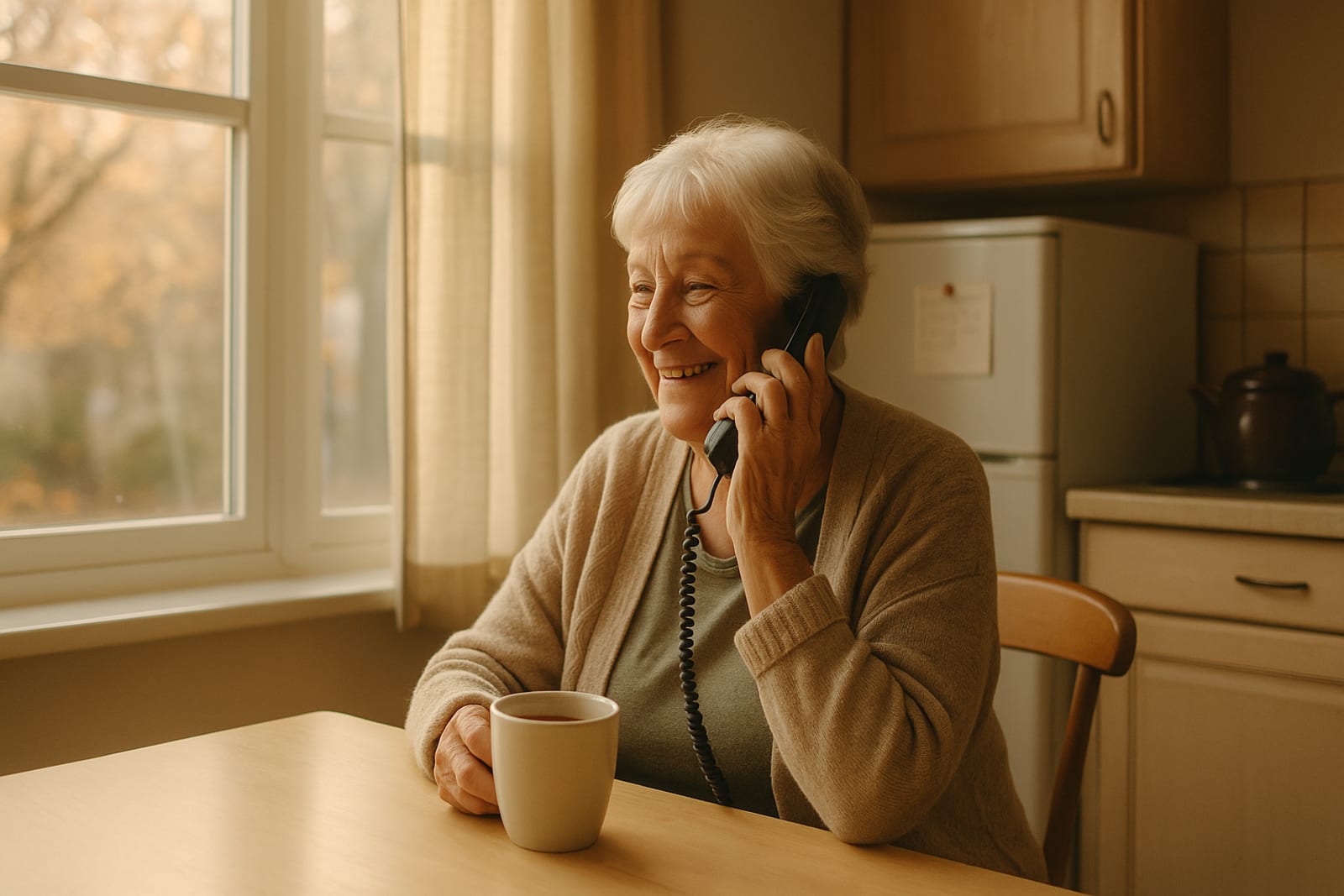
A Holiday Connection Plan for an Older Parent Who Lives Alone
A useful holiday connection plan is simple, predictable, and built with your parent rather than around them. Start by asking what kind of contact they actually enjoy, place calls or visits on a shared schedule, include one or two meaningful activities, and name a backup person when plans change. Living alone is not the same as feeling lonely, and the holidays do not automatically cause loneliness. The plan should support connection without treating your parent as a problem to solve.
If your parent lives alone in South Florida, or anywhere in the state, and the holidays are approaching, you have probably already started worrying. Maybe you live nearby and wonder whether a weekly visit is enough. Maybe you are a thousand miles away and the guilt of not being there sits in your chest every time you hang up the phone. Either way, you want to do something meaningful, not just check a box.
Here is what you need to know: a holiday connection plan does not have to be complicated. It just has to be honest, personal, and reliable. Below, we will walk through exactly how to build one, step by step, with your parent's dignity and preferences at the center of every decision.
Is Living Alone the Same as Being Lonely?
No, and this distinction changes every conversation you will have from here forward.
The National Institute on Aging (NIA) draws a clear line between loneliness and social isolation. Loneliness is the distressing feeling of being alone or separated. Social isolation refers to having few social contacts or people to interact with regularly. A person can live alone and feel deeply connected to the people they love. A person can also be surrounded by family at a holiday table and still feel lonely.
That matters because the way you open the conversation sets the tone for everything that follows. Starting with "You must be lonely" or "I worry about you being alone" can feel dismissive of the life your parent has built. It can feel like you are reducing their independence to a problem.
Better Questions to Ask
Instead of leading with assumptions, try questions that invite your parent to share on their own terms:
- "How connected have you been feeling lately?" This is open-ended and non-judgmental.
- "Who do you most enjoy hearing from?" This tells you where to focus energy.
- "Would you rather have a visit, a phone call, or help getting to an activity?" This gives them a choice.
- "Is there anything making it harder to stay in touch with people?" This surfaces practical barriers like transportation, hearing loss, or technology frustrations.
The CDC identifies several risk factors for social isolation and loneliness, including limited transportation, health or mobility concerns, sensory loss, bereavement, and separation from friends or family. But a risk factor is not a diagnosis. It is a reason to ask respectfully and look for barriers you might be able to help remove.
When you approach the conversation this way, your parent stays in the driver's seat. And that is exactly where they should be.
How Should a Family Build the Connection Plan?
Keep it simple. Make one page (or one shared document) with four columns: the connection, the person responsible, the preferred time, and the backup. Build it together with your parent. Include only what they actually want.
This is not a surveillance schedule. It is an agreement, a shared understanding of who will reach out, when, and how. When your parent has a say in what goes on that page, it stops feeling like monitoring and starts feeling like family.
Start with the People Already in Their Life
Before adding anything new, take stock of who is already there:
- Family members and close friends who call or visit regularly
- Neighbors they trust and interact with naturally
- Faith or cultural community contacts who are part of their weekly rhythm
- Former coworkers or longtime friends they have maintained relationships with
- Clubs, senior centers, libraries, or volunteer groups where they already participate
- Health or support professionals who are already involved in their care
The U.S. Surgeon General's advisory on social connection describes social connection through three dimensions: structure (who is present), function (what support they offer), and quality (how the interaction actually feels). A crowded calendar of obligatory calls may not feel connecting at all. One calm, unhurried conversation with the right person might mean everything.
Choose a Realistic Mix of Contact
Once you know who is in the picture, assign realistic roles. One family member might call on Tuesdays. Another might share a holiday meal. A neighbor might stop by briefly on a weekend morning. Someone else might provide a ride to a community event or a faith service.
If your parent prefers quiet connection, a card, a photo exchange, or a 15-minute conversation might be more welcome than a long, noisy gathering. The goal is not to fill every hour. The goal is to make valued connection reliable.
Key point: Do not assign roles to people who cannot keep them. A missed commitment hurts more than no commitment at all. If someone is likely to cancel, do not put them on the schedule. Build in a backup instead.
What Makes a Check-In Feel Personal Instead of Procedural?
This is where so many well-meaning plans go sideways. A daily call that starts with "Did you eat?" and ends with "OK, talk tomorrow" does not build connection. It builds resentment.
Ask about something your parent values. Talk about their favorite recipe, a game they follow, their garden, their faith tradition, or a story from their past. The best conversations are the ones where your parent is sharing something that matters to them, not just confirming they are still functioning.
Activities That Feel Meaningful, Not Mandatory
The NIA recommends meaningful activities, visits or communication technology, hobbies, volunteering, neighbors, and community resources as ways to stay connected. The key word is meaningful. Choose what fits the person, not what looks good on a checklist:
- Cooking a familiar recipe together by phone or in person
- Watching the same program and discussing it afterward
- Joining a community meal, class, walking group, or faith activity they enjoy
- Looking through family photos and recording the stories behind them
- Helping your parent contact a friend they have been meaning to reach
- Providing transportation or technology support so an existing relationship becomes easier to maintain
Do not force a new activity because it sounds healthy or productive. If your dad has never been interested in a senior center, the holidays are probably not the time to insist he start going. Ask what feels enjoyable, comfortable, and worth repeating.
When we talk to families about building a care plan, one of the first things we want to know is what makes the person happy. Is there certain music that when you play it, they smile? Did they used to love going to the beauty salon, or playing chess, or sitting by the pool? Quality of life is not just about safety. It is about the things that make someone feel like themselves.
Can Telephone Contact Actually Make a Difference?
Yes, with a few important caveats.
A 2026 randomized clinical trial in Hong Kong (HEAL-HOA) studied 1,151 older adults who were living alone, digitally excluded, lonely, and experiencing financial hardship. Eight structured telephone sessions using behavioral activation or mindfulness improved some 12-month loneliness measures more than a befriending control. This is promising evidence, but the participants were a specific, high-risk population in a specific cultural context. Applicability to your family's situation needs interpretation, not direct comparison.
A separate 2026 Hong Kong trial of 245 older adults found that group mindfulness was not superior to a social-contact control for loneliness at 12 months, although both groups improved from baseline. Without an untreated control group, it does not prove ordinary contact caused the improvement. But it does suggest that consistent, quality contact is at least part of the picture.
Making Phone Calls Count
The quality, consistency, and fit of the call matter far more than the frequency. A few practical steps:
- Confirm the best time. Call when your parent is alert and available, not when it is convenient for you.
- Reduce background noise. If they struggle to hear, turn off your TV, step away from the kids, and give the conversation your full attention.
- Allow a real conversation. Do not rush. If you only have five minutes, say so at the beginning and keep the call warm.
- If hearing is a barrier, consider a captioned phone, a different device, or an in-person visit. Encourage a professional hearing evaluation if the problem is worsening.
A phone call is not lesser than a visit. It is different. For some parents, especially those who value their privacy and routine, a call is the preferred form of connection. Respect that.
How Can the Plan Respect Independence?
Offer choices and keep the schedule visible. Ask your parent whether they want reminders. Ask who may receive an update if a call is missed. Do not create a monitoring system disguised as a connection plan.
A respectful plan includes a backup without assuming the worst. For example: "If Jamie cannot make the Tuesday call, Lee will call instead." For an agreed visit: "If transportation is canceled, we will switch to a phone call and reschedule." The backup preserves connection when ordinary plans change. It is not an alarm system.
When Cognitive or Health Changes Affect Planning
If dementia or another condition affects your parent's ability to participate in planning, the NIA suggests regular contact with a trusted person and considering home or community-based services. Adapt the plan to the person's current abilities and any professional guidance you have received.
Even in these situations, connection should stay personal. A caregiver who knows your parent's story, their preferences, and their routines can maintain the feeling of being known and valued. That is something we take very seriously. We ask dozens of questions during our intake process, not just about medical needs, but about personality, preferences, hobbies, and the little things that make someone feel at home in their own house.
What Should Be on Your Holiday Connection Checklist?
Use this as a working document. Print it, share it with siblings, and revisit it after the holidays to see what worked.
- Ask how connected your parent feels instead of assuming loneliness
- Ask which calls, visits, meals, or activities they want
- Write down who is responsible for each agreed contact
- Add a backup for plans likely to change
- Include at least one activity tied to purpose, interest, or community
- Check for transportation, hearing, vision, mobility, and technology barriers
- Keep calls at a preferred time with low background noise
- Share only the information your parent agrees to share
- Leave room for rest and familiar routines
- Ask afterward what felt good and what should change next time
- Tell a health professional if persistent loneliness, depression, anxiety, cognitive change, or another health concern is affecting daily life
When Should the Family Adjust the Plan?
Adjust it when contact is too much, too little, or not the right kind. Adjust it when barriers, availability, or preferences change. The holidays are a starting point, not a permanent structure.
Do not use one missed call as proof that something is wrong. Look for patterns and ask. If your parent seems withdrawn over several weeks, if they mention feeling lonely repeatedly, or if you notice changes in mood, appetite, sleep, or thinking, the NIA recommends speaking with a health professional who can evaluate factors a family schedule cannot address.
The plan should remain a living agreement. Keep what helps. Change what feels forced. Add support when a new barrier appears. And remember that the plan is not about you feeling better. It is about your parent feeling connected in a way that fits their life.
What to Do Now
This Week
- Have the conversation. Call your parent and ask how they are feeling about the upcoming holidays. Use the open-ended questions above. Listen more than you talk.
- Take inventory. Write down every person who is currently in regular contact with your parent. Note the method (call, visit, shared activity) and frequency.
- Identify one barrier. Is transportation an issue? Is hearing making phone calls frustrating? Is there a friend they have lost touch with? Pick one barrier you can address.
This Month
- Build the one-page plan together. Fill in the four columns: connection, person responsible, preferred time, backup. Share it with everyone involved so expectations are clear.
- Assign one meaningful activity. It does not have to be elaborate. Cooking a recipe together over the phone, watching the same movie, or driving them to a community event all count.
- Check technology. If your parent uses a phone, tablet, or computer to stay in touch, make sure it is working, charged, and easy for them to use. If it is not, find an alternative.
This Quarter
- Review and adjust. After the holidays, sit down (or call) and ask what worked and what did not. Update the plan for the new year.
- Consider ongoing support. If the holidays revealed gaps, whether your parent needs more companionship, help with transportation, or someone to check in consistently, think about whether in-home support could fill those gaps without disrupting their routine.
- Talk to a professional if needed. If persistent loneliness, mood changes, or cognitive concerns surfaced during the holidays, encourage a conversation with their doctor.
Frequently Asked Questions
How many check-ins per week are enough?
There is no universal number. The right frequency is whatever your parent wants and your family can reliably maintain. Two meaningful calls a week that happen consistently are worth more than seven rushed ones that taper off by January.
What if my parent does not like video calls?
Use the method they prefer. A regular phone call, a handwritten letter, an in-person visit, or a ride to a community event may fit them much better. Technology is a tool, not the goal.
What if family members live far away?
Long-distance family can make scheduled calls, arrange a shared activity (watching the same show, reading the same book), send photos or letters, coordinate local support with permission, or take responsibility for keeping a specific relationship active. Be specific about who will do what.
Should we invite our parent to every holiday gathering?
Offer clear choices rather than assuming they want to attend everything. Ask about timing, transportation, noise level, accessibility, rest needs, and how long they want to stay. An invitation supports belonging. Accepting the decision to decline supports dignity.
What if my parent says they feel lonely?
Listen without correcting or rushing to fill the calendar. Ask when the feeling is strongest and what kind of connection they miss. If loneliness is persistent or affecting sleep, mood, appetite, thinking, or daily life, encourage a conversation with a health professional.
The Bottom Line
A holiday connection plan works when it is built with your parent, grounded in what they actually enjoy, and kept by people who follow through. Living alone does not mean being lonely, and the holidays do not have to be a crisis. Ask, listen, plan together, and make the connection reliable.
If your family needs help adding consistent, personal support to a connection plan, whether that is companionship, transportation assistance, or simply having someone who knows your parent's routines and preferences checking in regularly, give us a call. Even if you are just exploring what is possible, you will hang up with better answers than you started with. Reach out to our team at 1Home Care Services and let us walk you through it.
Sources referenced in this article:
- National Institute on Aging: Loneliness and Social Isolation Tips for Staying Connected
- CDC: Health Effects and Risk Factors for Social Isolation and Loneliness
- U.S. Surgeon General Advisory on Social Connection and Community
- HEAL-HOA Randomized Clinical Trial, 2026
- Mindfulness-Based Intervention vs. Social-Contact Control Trial, 2026
Need Help With Home Care?
Our care team is ready to answer your questions and help you find the right care solution for your family.