
After-Hospital Home Care: Turning "Something Seems Different" Into Notes Your Care Team Can Use
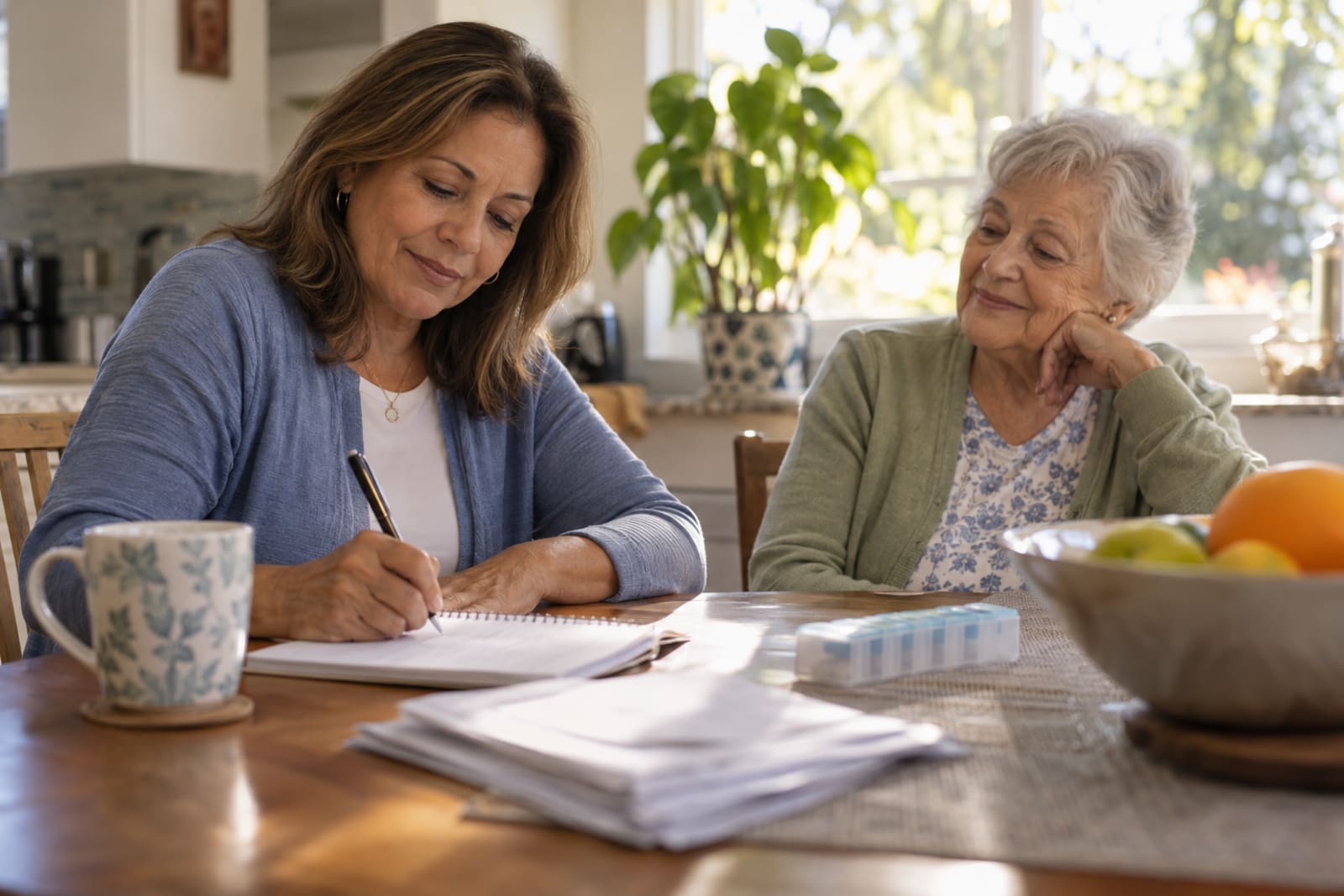
After-Hospital Home Care: Turning "Something Seems Different" Into Notes Your Care Team Can Use
Your mom has been home from the hospital for a few days. She is eating, she is moving around, and the discharge papers are on the kitchen counter. But something seems different. She is slower getting out of her chair. She left half her lunch again. She asked you twice whether she took her morning pills. None of it feels like an emergency, but you can't shake the feeling.
You pick up the phone to tell someone, and then you stop. What would you even say? "She just doesn't seem like herself" is honest, but it is hard for a doctor, nurse, or therapist to do much with a feeling.
If this sounds familiar, you are not overthinking it. The days and weeks of after-hospital home care are full of small changes, and families are often the first to notice them. The good news is that the gap between a vague feeling and useful information is smaller than you think. It mostly comes down to writing things down in a specific way and knowing where to send them.
Here's what you need to know:
- What belongs in an observation note and what to leave out
- A blank note template you can copy and use today
- Who should receive routine notes and how to agree on that route in advance
- Which concerns should never wait for a routine update
- A simple week, month, and quarter plan for staying organized
Why "Something Seems Different" Is Hard for the Care Team to Act On
When a loved one comes home after a hospital stay, there are often several people involved: family members, the primary care doctor, specialists, and in some cases nurses, therapists, or home caregivers. Each person sees a different slice of the day. Family and caregivers see the routines. Clinicians see a snapshot during a visit.
That snapshot matters, but it is limited. A person can look steady for a short appointment and still be struggling with stairs at night or skipping meals at home. The people who see daily life hold information the clinical team cannot gather on its own.
The gap between noticing and describing
The challenge is that what we notice tends to arrive as an impression. "Dad seems off." "Mom is more tired." "Something isn't right with her walking." Those impressions are real, and they are worth paying attention to. But on their own, they leave the clinician guessing.
Compare these two messages:
- Vague: "She seems weaker since she came home."
- Specific: "Since Tuesday, she has needed two tries to stand up from her recliner. It happens every time, mostly in the afternoon. On Wednesday, she reached for the wall while walking to the bathroom."
The second message gives the care team something to work with: what changed, when it started, how often it happens, and the circumstances around it. The clinician can then decide what it means and what, if anything, should happen next.
Your job is to observe, not to diagnose
This is an important distinction, and it should take some pressure off your shoulders. You are not expected to figure out why something is happening. Guessing at a cause can actually muddy the picture. "I think her blood pressure medicine is too strong" is a theory. "She has felt dizzy when standing up three mornings this week" is an observation.
Observations are your lane. Interpretation, diagnosis, and any decision about medications or treatment belong to the appropriate clinician. Keeping those roles clear makes your notes more useful and keeps everyone working from the same facts.
What Belongs in an Observation Note After Discharge?
The Alzheimer's Association's guidance on working with the doctor recommends that caregivers keep notes on behavior, routines, and eating habits, and bring a current medication list to medical visits. That advice applies well beyond dementia care. It is a solid foundation for any family supporting someone at home after a hospital stay.
The four details that make a note useful
Every observation becomes far more helpful when it includes these four pieces:
- What changed. Describe what you saw or heard in plain words. "Ate about half of breakfast" is better than "poor appetite."
- When it began. A date, or at least a day of the week. "Started Sunday" is clearer than "recently."
- How often it happens. Once? Every morning? Three times this week? Getting worse, better, or staying the same?
- Relevant circumstances. Time of day, what they were doing, what came right before. "After her nap" or "when walking from the bedroom to the kitchen" can matter a lot.
If you remember nothing else from this article, remember those four. They turn "something seems different" into information a care team can evaluate.
Areas worth watching at home
You don't need to track everything. Focus on the parts of daily life where changes tend to show up:
- Behavior and mood: more confusion, withdrawal, irritability, or repeated questions
- Routines: sleeping much more or less, skipping a usual activity, staying in bed later
- Eating and drinking: portions left on the plate, skipped meals, changes in what they will eat
- Movement: trouble standing, holding onto furniture, shuffling, near-falls, or actual falls
- Medications: doses that appear missed or doubled, confusion about what was taken, a new prescription that changed the routine
- Personal care: changes in bathing, grooming, or toileting habits
What to leave out
Keep notes factual and kind. Skip diagnoses, blame, and assumptions about motive. "She refused her walk" can become "She said she was too tired to walk at 10 a.m. and again at 2 p.m." The second version describes the same moment without judgment, and it tells the clinician something more useful.
Nothing is too small to write down. A detail that seems trivial on its own can mean more when it shows up next to three others.
A Blank Observation Note You Can Copy
Here is a simple template you can print, save on your phone, or share with anyone who helps with care. It is an editorial aid to help you organize what you see, not a clinical form or a substitute for instructions from your loved one's medical team.
Observation note
- Date and time written: ____
- Written by: ____
- What I noticed (in plain words): ____
- When it first started: ____
- How often it has happened: ____
- Is it changing? (better / worse / same): ____
- What was happening at the time (activity, time of day, location): ____
- Anything new recently (medication, appointment, visitor, schedule change): ____
- Who I shared this with, and when: ____
- Response or next step I was given: ____
A short message format for routine updates
When it is time to pass a routine observation along, a short, structured message keeps it clear:
Since [date], I have noticed [specific change]. It has happened [how often], usually [circumstances]. Nothing else new except [any recent changes]. Could you let me know if you would like us to do anything differently or watch for anything specific?
That last question matters. It invites the clinician to tell you what they want to know going forward, which makes your next note even more useful.
Who Should Receive Routine Notes?
This is the question many families never ask until they are standing in the kitchen holding a note and wondering who to call. The best time to answer it is before you need it.
Agree on the route ahead of time
Every care situation is different, so there is no single right answer. What matters is that everyone involved knows the answer for your situation. Ask the discharge team, the primary care office, and any home health or home care provider involved:
- Who should receive routine, non-urgent observations? A nurse line, a patient portal, a care coordinator, or a specific person?
- How do they prefer to receive them? Phone, portal message, or a written summary at appointments?
- What do they want to hear about? Some clinicians will name specific things to watch after a particular hospital stay.
- What is the after-hours route? Who do you contact on a weekend or evening for something that cannot wait until Monday?
Write the answers down and keep them with your notes. If you have the discharge paperwork, check whether it already lists contact numbers and symptoms that should prompt a call.
Pick one family point person
When several siblings, a spouse, and a neighbor are all noticing things, information can scatter quickly. Choose one family point person who collects notes and passes them along through the agreed route. Others can still contribute observations, but sending them through one person keeps the care team from receiving five slightly different versions of the same concern.
Bring notes and a medication list to appointments
The Alzheimer's Association recommends bringing a current medication list to medical visits. Pair that with your recent observation notes and you walk into the appointment with a clear picture rather than a scramble to remember. Include prescriptions, over-the-counter medicines, vitamins, and supplements, along with doses and when they are taken.
Questions to ask any home care provider
If a home care agency is part of the plan, including ours, it is fair to ask how observations are handled. Good questions include:
- Who on your team receives what caregivers notice, and how is it documented?
- How do you share observations with family and, with consent, with the medical team?
- What is the process for urgent concerns versus routine updates?
- What are your caregivers' credentials, and what tasks are within their scope?
The answers vary from provider to provider and from case to case, so ask directly rather than assuming. A provider who welcomes these questions is usually one you can talk to openly later on.
If you want a broader look at how ongoing coordination can work between family, caregivers, and medical providers, our article on what proactive home care coordination actually looks like goes deeper on that topic.
Which Concerns Require the Clinical or Emergency Route Instead?
Observation notes are for patterns and changes that the care team should know about. They are not a holding place for anything that feels serious right now. This is the most important boundary in the whole system.
Emergencies do not wait for a routine update
If you believe your loved one may be having a medical emergency, call 911. Don't write it down first, don't wait to reach the point person, and don't send a portal message. Notes can be filled in afterward.
Urgent concerns use the clinical route you were given
Some concerns are not emergencies but should not wait for the next appointment either. This is where the contact information from the discharge team or the primary care office comes in. If the discharge instructions list specific symptoms that should prompt a call, follow them. If you are unsure whether something is urgent, it is reasonable to call the clinical contact and ask.
Routine observations go through the agreed route
Everything else, such as gradual changes in appetite, a slower morning routine, or mild changes in sleep, goes into your notes and through the routine channel you set up. Consistency matters here. Regular, specific updates help the care team see trends that no single visit would reveal.
Falls and near-falls deserve a mention
A fall or near-fall is worth recording carefully, even when no one is hurt. The CDC's Still Going Strong guidance for older adults encourages talking with a doctor or pharmacist about falls risk, and it points to practical home steps like keeping floors clear and making sure lighting is good.
When you note a near-fall, include where it happened, what time it was, what your loved one was doing, and whether lighting, a rug, a cord, or footwear played a part. That detail helps both the clinical conversation and any practical changes you make around the house.
How Home Caregivers Fit Into After-Hospital Home Care
Families often ask what role a home caregiver plays once someone is back from the hospital. The honest answer is that it depends on the person's needs, the caregiver's credentials, and the plan agreed on with the family and, where relevant, the medical team.
Credentials shape what a caregiver does
Home care can include different levels of support. A home health aide (HHA) or certified nursing assistant (CNA) typically helps with non-invasive, everyday care such as bathing, dressing, meals, and getting around the house. Licensed nurses, including licensed practical nurses (LPNs) and registered nurses (RNs), handle more medical tasks, generally under physician orders. Scope varies, so it is always worth asking exactly what a given caregiver can and cannot do.
Observing and relaying, not deciding
Whatever their role, a caregiver who is in the home regularly can notice changes in routine, eating, mood, and movement. That kind of attention can add to what family members see, especially when family lives far away or works long hours. But noticing a change is not the same as diagnosing it. Decisions about what an observation means, and whether medications or treatment should change, stay with the appropriate clinician.
That is exactly why the four-detail note matters. Whether the observation comes from a daughter, a spouse, or a caregiver, it is most useful when it describes what changed, when, how often, and under what circumstances.
If you are exploring support during recovery, you can learn more about our post-hospital recovery care. And if you are facing a discharge right now with no plan in place, start with our guide on what to do when a parent is discharged with no plan.
What To Do Now
You don't have to set all of this up in one afternoon. Here is a realistic way to build the habit.
This Week
- Copy the blank observation note onto paper or into your phone, and share it with anyone who helps with care.
- Gather the discharge paperwork and find any listed contact numbers and symptoms that should prompt a call.
- Write down the emergency rule where everyone can see it: if it might be an emergency, call 911 first.
- Start one note today, even if the change seems small. Practice makes the four details automatic.
This Month
- Confirm the routine route. Ask the primary care office and any home health or home care provider who should receive non-urgent observations and how.
- Choose your family point person and let siblings, spouses, and helpers know who it is.
- Build a current medication list with every prescription, over-the-counter medicine, and supplement, then bring it and your notes to the next appointment.
- Walk the main paths through the home with the CDC's tips in mind: clear floors and good lighting, especially between the bedroom and bathroom.
This Quarter
- Review your notes for patterns. Look back over several weeks. Are certain changes improving, holding steady, or showing up more often?
- Ask the care team what they want tracked. As recovery continues, their priorities may shift.
- Revisit the level of support at home. If notes show the same struggles week after week, that is useful information for a conversation with the medical team and with your family about whether more or different help makes sense.
- Update contacts and routes whenever a provider, schedule, or living situation changes.
The Bottom Line
Specific, dated observations give your loved one's care team far clearer information than a vague sense that something is off. Record what changed, when it began, how often it happens, and the circumstances, then send it through the route you agreed on and leave diagnosis and treatment decisions to the appropriate clinician. And anything that might be an emergency goes straight to 911, never into a routine update.
Let's Talk Through Your Situation
Recovery at home brings a lot of questions, and nothing is too small to ask about. If you are wondering what kind of support would help during after-hospital home care, or simply want help thinking through how observations and updates could work for your family, give us a call. Even if you are just exploring options, you should walk away with clearer next steps than you started with. To check whether we currently serve your address, visit our coverage page.
Need Help With Home Care?
Our care team is ready to answer your questions and help you find the right care solution for your family.